
 See Our Latest Article on HelloNation
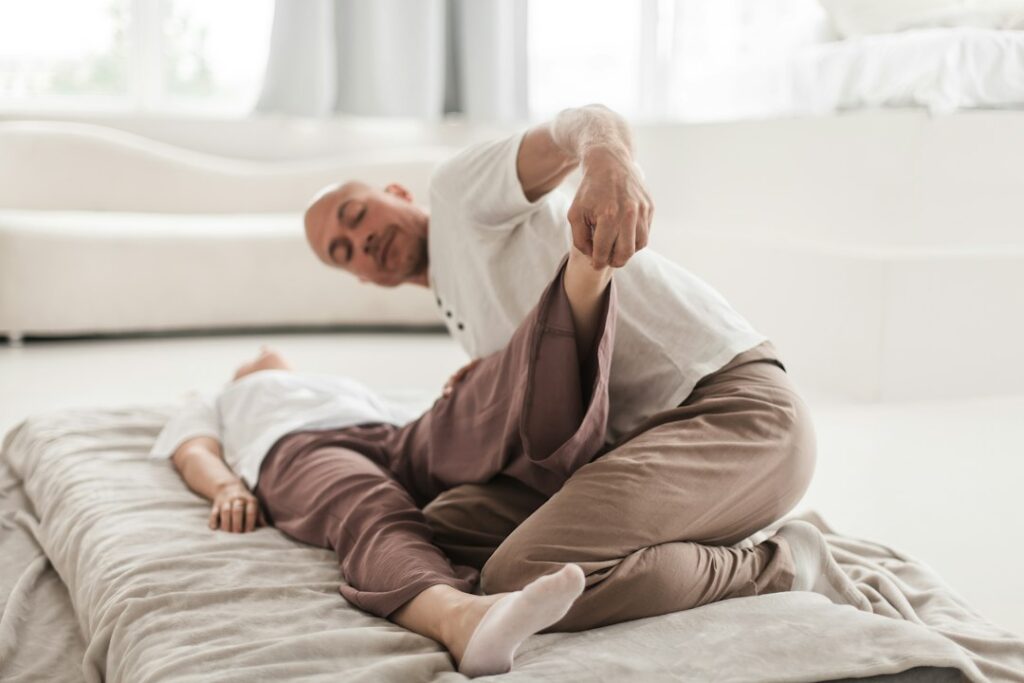
Chronic back pain can make falling asleep, staying asleep, and getting out of bed difficult. The most helpful changes are usually practical: support the spine in a comfortable position, reduce strain during nighttime movement, maintain gentle daytime activity, and recognize symptoms that need medical evaluation.
Which sleeping position is best for back pain?
There is no single position that works for everyone, but side-lying and back sleeping are often easier on the lower back than sleeping on the stomach.
If you sleep on your side, keep your knees slightly bent and place a pillow between them. This can help keep the hips and pelvis from rotating forward, which may reduce pulling through the lower back. A full-length pillow can provide additional support if your upper leg tends to fall across your body.
If you sleep on your back, place a pillow under your knees. This may reduce the arch in the lower spine and allow tight back muscles to relax. A small rolled towel under the waist can help some people, but it should not create pressure or force the back into an exaggerated curve.
Stomach sleeping can increase strain because the lower back may sag and the neck usually remains turned to one side. If changing positions is difficult, placing a thin pillow under the hips and lower abdomen may reduce some of the pressure. The goal is comfort and neutral alignment, not forcing a position that causes more pain.
How should a bed and pillow be adjusted?
A mattress does not need to be extremely hard to support the back. Excessively firm bedding can create pressure at the shoulders, hips, and ribs, while a mattress that allows the body to sink deeply may make turning more difficult. A supportive, relatively stable surface is usually a better starting point than either extreme.
Check whether the pillow keeps the neck level with the chest and back. Side sleepers often need a taller pillow to fill the space between the head and mattress. Back sleepers may do better with a thinner pillow. A pillow that pushes the head forward or allows it to drop sharply to one side can contribute to morning neck and upper-back discomfort.
Residents dealing with cold winters may also notice that a bedroom becomes uncomfortable when nighttime heating dries the air or temperature changes cause muscles to feel stiff. Keeping the room comfortably warm, using breathable bedding, and avoiding overheating can make it easier to relax without relying on excessive layers that restrict movement.
What can help before bedtime?
A predictable evening routine can reduce the cycle in which pain causes poor sleep and poor sleep makes pain feel more intense. About 30 to 60 minutes before bed, consider:
- Taking a warm shower or using gentle heat for a short period
- Walking slowly around the home rather than remaining seated for the entire evening
- Performing easy, pain-free movements such as pelvic tilts or gentle knee bends
- Limiting heavy chores, lifting, or vigorous exercise immediately before bed
- Dimming lights and reducing stimulating screen activity
- Writing down worries or next-day tasks so they are not repeatedly reviewed in bed
Heat can relax some people, while others prefer a cold pack after activity. Neither should be applied directly to the skin or used while asleep. Stop any movement that causes sharp, spreading, or electrical pain.
Long periods of inactivity are not usually helpful for chronic back pain. Gentle daytime movement, short walks, and changing position regularly can reduce stiffness that becomes noticeable at night. In Chenango, winter driving, snow removal, and time spent indoors can increase sitting and reduce normal movement, so brief activity breaks may be especially useful during colder months.
How can you get out of bed with less pain?
The first movements of the morning can be difficult because the back has been still for several hours. Instead of sitting straight up, bend the knees, roll onto your side, and use the arms to help push the upper body up while the legs move toward the floor.
Once standing, pause before walking. Take a few gentle steps and allow the back to loosen gradually. Avoid twisting quickly to reach for clothing, a phone, or a bedside object. Keeping commonly used items within easy reach can prevent repeated awkward movements during the night and morning.
If pain is worse after sleeping in one particular position, track the pattern for several nights. Note the sleeping position, pillow arrangement, physical activity from the previous day, and whether symptoms remain in the back or travel into a leg. This information can help identify useful adjustments.
Should stretching or exercise be done at night?

Gentle movement may help, but aggressive stretching is not required and can worsen symptoms. A useful rule is that an exercise should feel mild and controlled during the movement and should not cause a lasting increase in pain afterward.
Some people tolerate:
- A slow walk around the room
- Gentle knee-to-chest movement, one leg at a time
- Small pelvic tilts while lying on the back
- Controlled hip and hamstring movements
- Deep, relaxed breathing while allowing the abdomen and back muscles to soften
People with diagnosed disc problems, osteoporosis, recent injuries, or pain that travels below the knee may need more individualized guidance before starting a new exercise routine. Chiropractic care, physical therapy, and medical evaluation can each play different roles depending on the cause, duration, and pattern of symptoms. No single approach is appropriate for every type of back pain.
What if pain repeatedly wakes you up?
Pain that regularly interrupts sleep deserves attention, especially when self-care changes have not helped. Keep a brief record of when the pain begins, whether it improves after changing position, and whether numbness, tingling, weakness, or leg pain is present.
Seek prompt medical evaluation for back pain accompanied by new bowel or bladder problems, numbness around the inner thighs or groin, significant leg weakness, fever, unexplained weight loss, or pain after a serious fall. Medical advice is also appropriate when pain is progressively worsening, is severe at rest, or consistently becomes worse at night.
These symptoms do not necessarily indicate a serious condition, but they should not be managed only by changing pillows or sleeping positions.
What is a realistic goal for better sleep?
The goal is not to find a perfect position that eliminates every symptom immediately. A more realistic plan is to reduce nighttime aggravation, improve the ability to turn and rise from bed, and create enough comfort for longer periods of uninterrupted sleep.
Try one change at a time for several nights: a pillow between the knees, support under the knees, a different pillow height, a short evening walk, or a safer method for getting out of bed. Small adjustments are easier to evaluate than changing the entire sleep routine at once. If chronic pain continues to interfere with sleep, a thorough assessment can help determine whether the problem is primarily muscular, joint-related, nerve-related, sleep-related, or connected to another health condition.
